
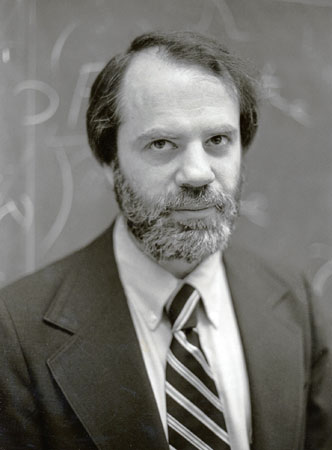
Saul Aaron Kripke b. 1940
As the Stanford Encyclopedia of Philosophy points out, “If anything is a non-actual possible object, a unicorn is. Or so it appears.” Possible objects (including fictional characters like Sherlock Holmes and mythical creatures such as unicorns) create all sorts of interesting and bizarre logical conundrums. On this episode of the Will to Power Hour, we’ll discuss Saul Kripke’s controversial claim that unicorns are NOT, in fact, possible objects. We’ll even explore the phenomenon of Bronyism, all while sipping Lagunitas Brewing Company’s deliciously hoppy Little Sumpin’ Sumpin’ Ale. Drink up!
Abstract:
In January 1970, American philosopher and logician Saul Aaron Kripke gave a series of three lectures at Princeton University that rocked the foundations of analytic philosophy. These lectures are entitled Naming and Necessity and were published in book form with an addendum in 1980. In them, Kripke dismantled the reigning notions of how possibility, necessity, and reference work. In short, he argued that the traditional descriptivist theories of reference – in which a name is synonymous with a description or set of properties – are problematic because of how possible worlds and reference work together. We can imagine counterfactual situations in which objects have different properties than they actually have. These possibilities spell problems for descriptivism because certain sentences that should be both true and informative in fact come out either false or uninformative. Kripke argued that we need to rethink naming and return to a Millian-like paradigm – in which names act like tags and are “connected” directly to their objects – but one which incorporates the concept of possible worlds. One consequence of this new paradigm is that fictional objects such as unicorns, Sherlock Holmes, or horcruxes are not metaphysically possible objects. In other words, horse-like creatures with horns are possible objects – they exist “in some possible world” – but those creatures could never rightfully be called “unicorns.” Check out our Episode 4 Explainer and the readings below for a more detailed argument.
Readings:
- Section 4 of “Possible Objects” from the Stanford Encyclopedia of Philosophy
- This handy dandy overview of Saul Kripke’s Naming and Necessity
- Our Episode 4 Explainer
Download: Episode 4 – On the Possibility of Unicorns
Stream:
 The Will to Power Hour